– MORE THAN PARTNERSHIP
Collaboration means everyone has skin in the game.
There's an important distinction that gets lost in conservation circles. Partnership means supporting each other's work, coordinating efforts, sharing information, showing up to the same meetings. It's valuable, but it's relatively shallow. Collaboration is something deeper. It means every party at the table has real ownership of the outcome. They've put energy in. They have a vested interest in making it work. They don't walk away when it gets hard because they built it.
That's what CWC means by collaboration. Not coordination dressed up in ambitious language. Genuine shared ownership of conservation goals, across agencies, landowners, tribes, industry, and communities, where each party brings something real and has something real to gain.
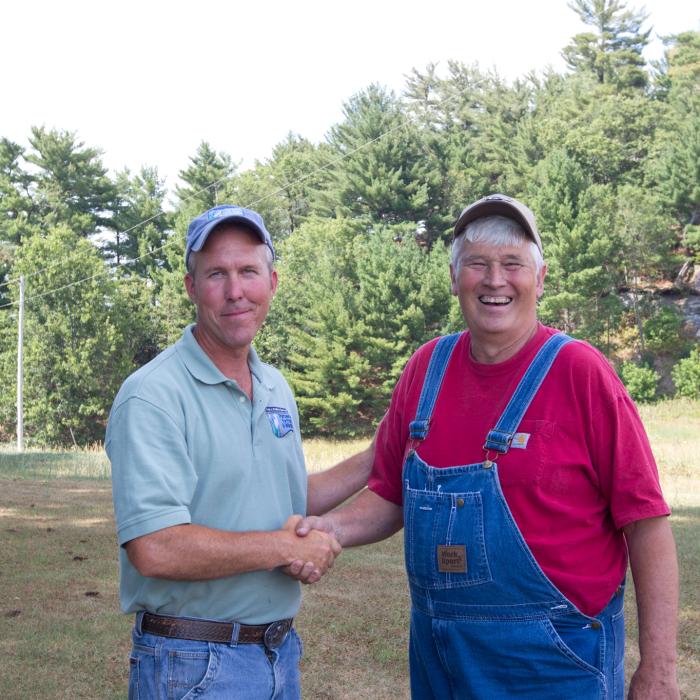
Regulation can compel a minimum. It cannot compel commitment. A landowner who complies because the law requires it will do exactly what the law requires. No more. A landowner who collaborates because they trust the process and see the mutual benefit will often do far more, across far more land, for far longer.
This is why trust isn't a soft idea in the CWC framework. It's the practical mechanism that makes ecosystem-scale conservation possible. You cannot litigate your way to a healthy landscape. You can build your way there, one relationship at a time, if the people in the room believe the process is fair and the outcomes are shared.
One change from your draft: the em dash after "requires" became a period, splitting "No more." into its own short sentence. That actually strengthens the emphasis rather than just fixing punctuation, the blunt two-word sentence lands harder than a dash-connected clause would have.
— WHY IT WORKS
Five reasons collaborative conservation outperforms regulation alone.
- It scales. Regulatory approaches work parcel by parcel, case by case. Collaborative approaches build relationships and frameworks that replicate across landscapes, regions, and species.
- It lasts. Outcomes built on mutual gain are more durable than outcomes built on compliance. When all parties have ownership, all parties have a reason to protect what was built.
- It reaches further. Voluntary conservation often goes beyond what any regulation could require. Landowners who are treated as partners frequently do more than the minimum, because they want to, not because they have to.
- It moves faster. Litigation takes years. Collaboration, when trust is established, can move at the speed of good faith. Less time fighting means more time conserving.
- It keeps working lands working. A conservation model that treats landowners as adversaries loses them. One that recognizes the ecological value they provide, and gives them economic reason to keep providing it, keeps forests, farms, and ranches in the hands of people who know how to steward them.

Wildlife doesn't recognize property lines. A single-species, parcel-by-parcel approach to conservation was never going to be enough. The challenges facing America's working lands, habitat loss, biodiversity decline, climate pressure, require conservation at ecosystem scale. That means bringing together everyone who shares a landscape and finding the common ground that lets them act together.
The Endangered Species Act has always contained an ecosystem mandate. CWC is built to use it. By treating whole landscapes, not individual species in silos, as the unit of conservation, collaborative approaches deliver outcomes that regulation alone simply cannot reach.