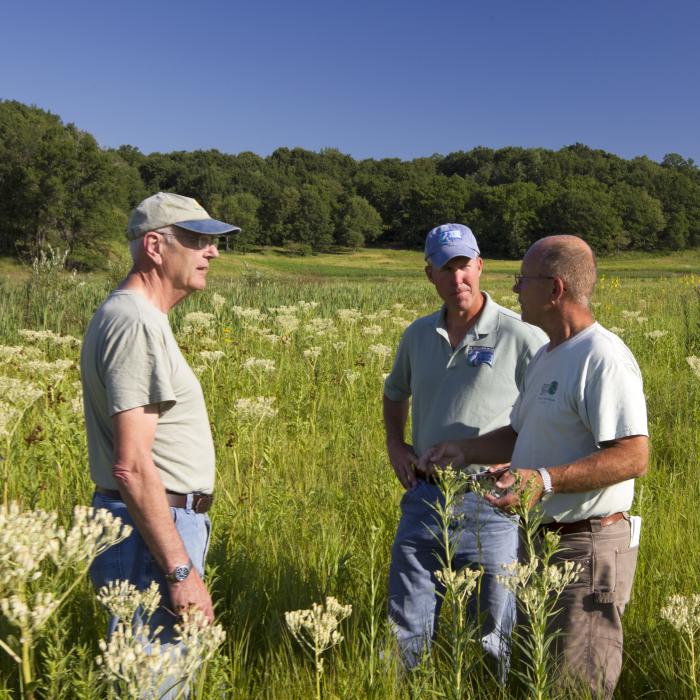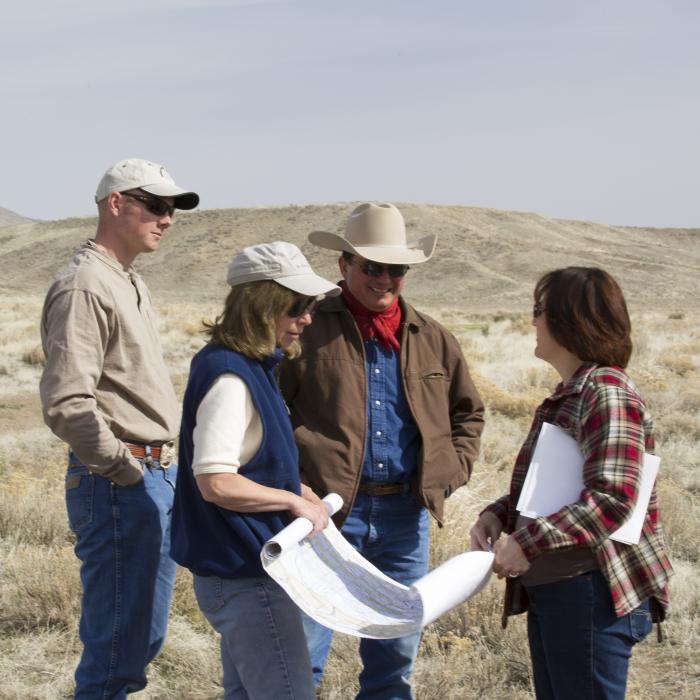
Conservation Without Conflict is a coalition of more than 30 public and private organizations united by a shared conservation philosophy. It operates independently, administered through the Wildlife Management Institute, one of the oldest and most respected natural resource organizations in North America. CWC brings together partners who might not otherwise share a table: federal agencies, state wildlife departments, private landowners, NGOs, industry leaders, and conservation advocates, giving them a framework for working toward common goals.
CWC is not a regulatory body. It doesn't issue rules or enforce compliance. It advances a collaborative, voluntary, trust-centered model, and proves through real-world examples that it works.
– HOW WE OPERATE
The coalition's work centers on three ideas.
Members communicate regularly, contribute their expertise, and carry this approach back into their own organizations. The coalition does not ask members to set aside their missions. It asks them to align around a shared commitment to voluntary, collaborative conservation.
- First, we share what works. We document collaborative conservation in action, capturing the tools, incentives, and partnerships that deliver results, and put that knowledge in the hands of practitioners nationwide.
- Second, we find better solutions. Existing tools do not always fit the challenge. We identify the gaps and push for new approaches and incentives that make voluntary collaboration easier to choose.
- Third, we make the case. Conservation that goes unnoticed does not shift how people think about it. We tell the story of what is working, because changing the culture around conservation is the long game, and it will not happen on its own.

– WHO’S AT THE TABLE
A coalition built across sectors, not within one.
CWC brings together federal and state agencies, conservation organizations, industry, researchers, and landowners, each with a stake in keeping working lands working. What unites them isn't a shared mandate. It's a shared commitment to voluntary, collaborative conservation.
- Federal agencies: U.S. Fish and Wildlife Service, USDA Forest Service, Natural Resources Conservation Service (NRCS), Bureau of Land Management, Department of Defense, and the Environmental Protection Agency
- State agencies: represented through the Association of Fish and Wildlife Agencies
- Conservation organizations: including The Nature Conservancy, Ducks Unlimited, the National Wild Turkey Federation, the National Fish and Wildlife Foundation, the Wildlife Management Institute, and others
- Industry partners: including Southern Company, the Sustainable Forestry Initiative, the National Alliance of Forest Owners, and the Electric Power Research Institute
- Research and policy organizations: including the Property and Environment Research Center, Texas A&M Natural Resources Institute, and the National Council for Air and Stream Improvement (NCASI)
- Landowner groups: including the Western Landowners Alliance and Forest Landowners
Our vision is for voluntary collaboration to become the primary model for wildlife conservation on working lands across the United States.
To get there, we're working to foster a culture of enduring trust and partnership across diverse sectors, groups, and individuals, supporting a sustainable national landscape that conserves wildlife, keeps working lands working, and improves quality of life for landowners and communities.